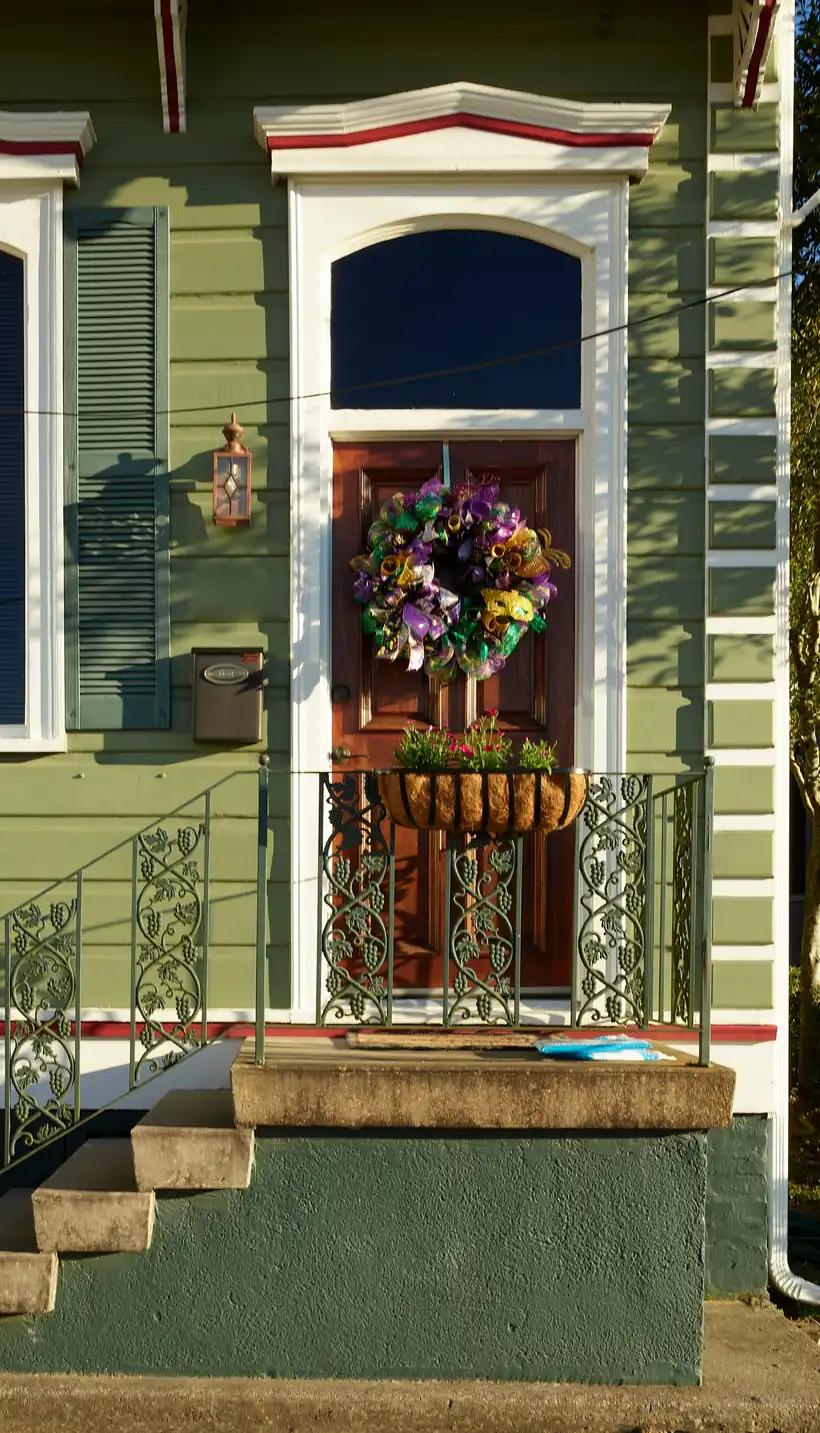
Why a door can stick without anything being wrong
Wood takes on and gives up moisture, and Greater New Orleans is humid. A door, frame or floor can swell in wet weather and ease off later, and paint buildup and loose hinges can cause rubbing. Sticking that comes and goes with the seasons, affects only one door, and does not come with other changes is less likely to be related to structural movement than sticking that is new, getting worse, and shows up alongside other changes. That is a reason to look closer, not a diagnosis.
Why a door can stick because the house moved
A door fits inside a frame that is part of a wall, and the wall rests on the floor framing, which rests on beams and piers. If a support settles or a member weakens, the frame can twist slightly and a door that fit before no longer does. The City’s hazard mitigation plan notes that houses not on deep pilings experience differential settlement and cracking in New Orleans’ soft soils; see house settling.
Other conditions can bend or distort door frames too. One university extension source lists broken door frames among the signs that can accompany termite damage, so a sticking door does not on its own tell you which problem you have.
What to record
| Question | Why it helps |
|---|---|
| Which door or window, and where exactly does it rub or gap? | Shows whether the frame is out of square and in which direction |
| When did it start, and does it change with the weather? | Seasonal swelling behaves differently from steady movement |
| Do neighboring doors, windows or cabinets also stick? | Several changes in one area point away from a single loose hinge |
| Have floors, cracks or baseboard gaps changed in the same place? | Different signs together are what professionals look for |
| Was there a storm, leak, flood, repair or nearby digging around that time? | Gives a possible trigger to mention |
Steps that keep the evidence
- Photograph the gap or rub point with a ruler in the frame, and date the photo.
- Hold off on planing or shaving the door until someone has seen it. Cutting a door to fit can hide a pattern that is useful to an inspector.
- Keep the log going. Our printable floor, crack and door log has room for doors, floors and cracks.
When to ask a professional
Ask promptly if doors began sticking suddenly, if several changed together, or if they appear along with new cracks, a sloping or soft floor, or visible damage to piers or wood under the house. Depending on what you find, that might be a foundation or leveling contractor, a licensed pest control operator for termite signs, a plumber for a leak, or a structural engineer. Structural work generally needs a City permit; see structural repair permits.
Sources (4)
- City of New Orleans, Hazard Mitigation Plan: SubsidenceRead October 7, 2026
- Mississippi State University Extension: Signs of Termite InfestationRead October 7, 2026
- USDA Forest Service, Wood Handbook ch. 14: Biodeterioration of WoodRead October 7, 2026
- City of New Orleans: Renovation (Structural) / Elevation PermitRead October 7, 2026
Next step
If doors are sticking and something else changed
Describe which doors, when it started, and anything else that changed.
Your request comes to NOLA Raised Home first. If it looks like a fit, we share it with one independent local provider, which decides whether it can help. Not every request is a match. We are not the contractor. How it works.